We started our week on Washington’s Olympic Peninsula in Forks, WA, a hamlet on the Olympic Highway, which is famous in some circles for the steamy vampire romance series, “Twilight,” which is a series of both books and films, all set in Forks. In the early days when Twilight was new, it wasn’t unusual to see teenage girls crowding around the “The City of Forks Welcomes You” sign posing for a photo or taking a selfie. Even though the fan frenzy has cooled a bit since the books and films came out 10 to 15 years ago, there is still a lot of merch for sale, a museum devoted to the series, and a Twilight weekend held annually in mid-September.


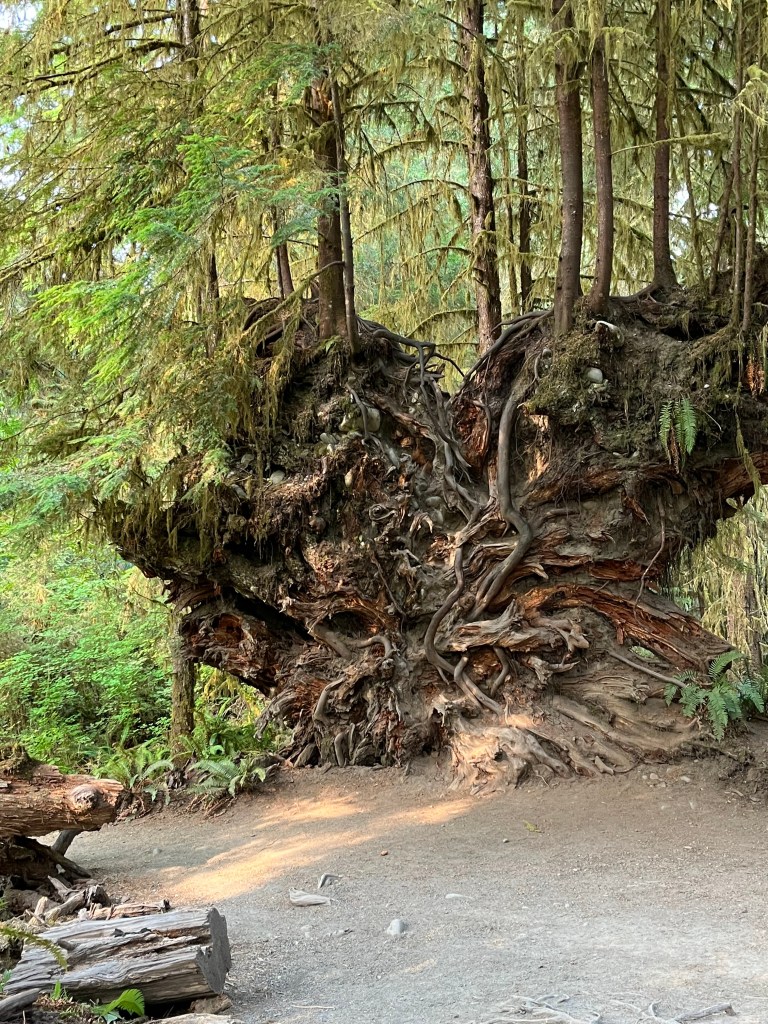
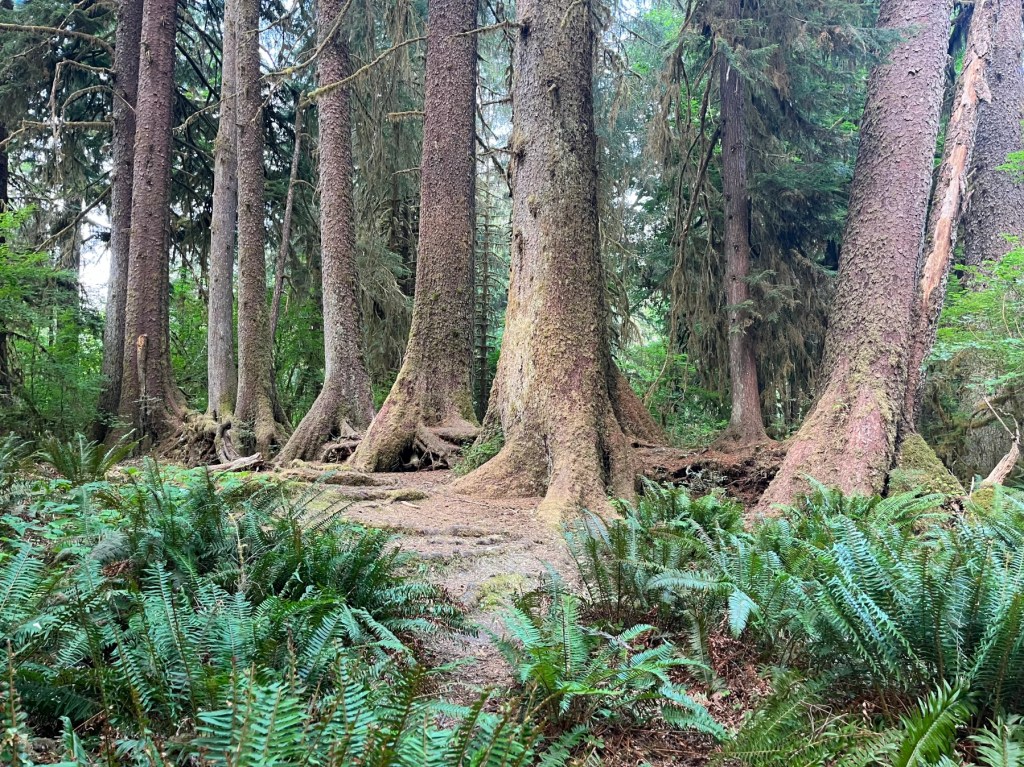
We were in town to visit the Hoh Rainforest, an hour down the road. John has been fascinated with the Hoh Rain Forest ever since he learned that this small area of Washington receives twelve feet of rain per year, 2.5 times the annual rainfall of our wet home state of Louisiana. To experience the Hoh Rain Forest, which is a part of Olympic National Park, it’s necessary to get up and out very early, as its small parking lot fills quickly. Those who arrive early are treated to a walk in an eerily beautiful and enchanting forest, draped extravagantly in mosses and bathed in morning sunlight. Those arriving later in the day wait in a line of cars for as long as two hours. Sure, it would be easy for the National Park Service to just create more parking space, but this is a fragile environment which offers only two short trails for day visitors, the 1.1 mile Hall of Mosses and the 1.4 mile Spruce Nature Trail in addition to the 34.6 mile Hoh River trail for backpackers. It would easily be damaged by too many people.


Our second stop of the day was Rialto Beach. The clouds and misty chill on the day we visited enhanced its windswept and dramatic presence, its shore lined with imposing driftwood trees and rocky beach.

A day of waterfalls
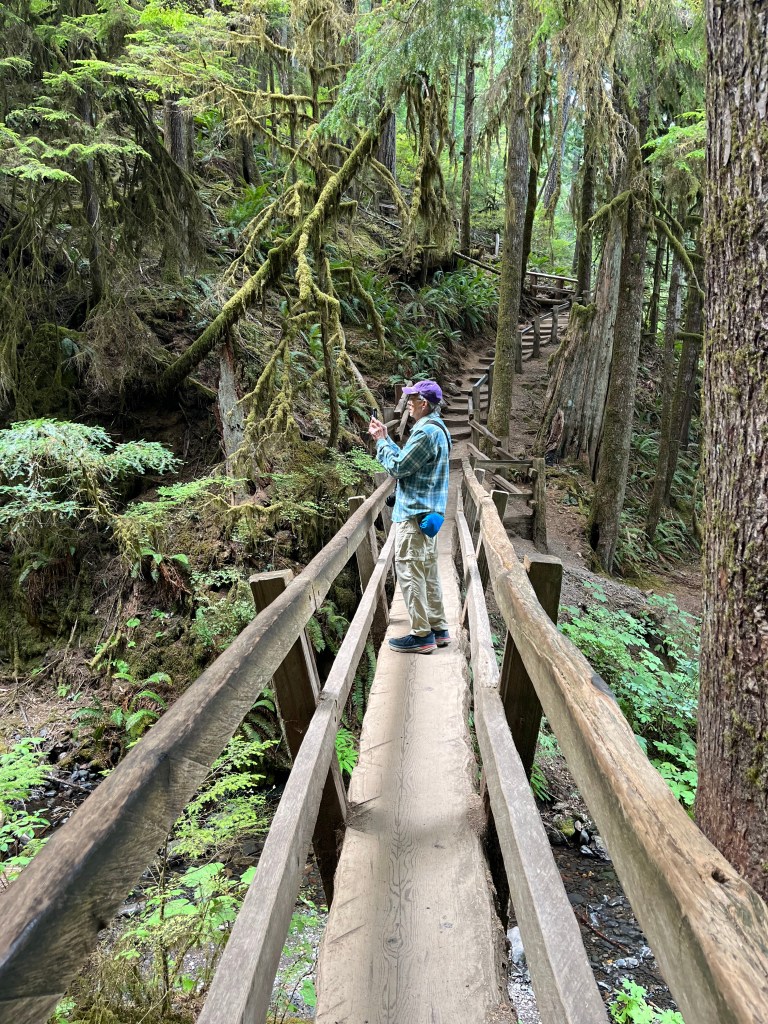
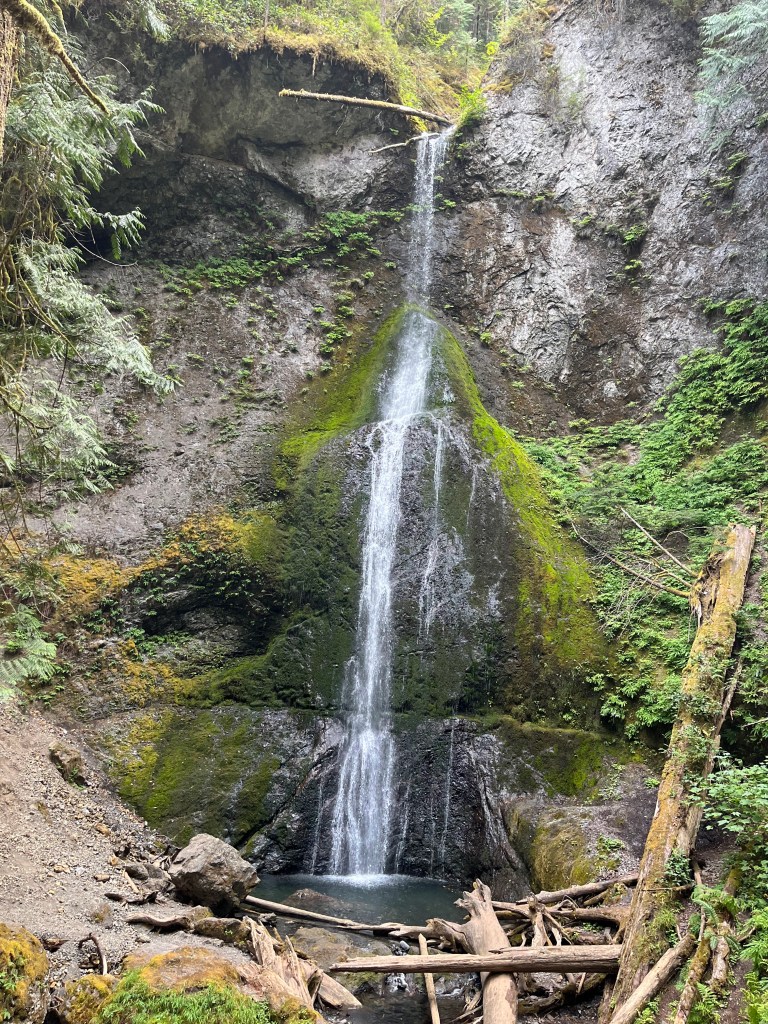
We moved on from Forks to the northeast, stopping by two waterfalls along the way, Sol Duc Falls and Marymere Falls. We knew that the Pacific Northwest is in a drought this summer and we’ve seen a number of waterfalls that are described as “stunning,” but are currently mere trickles, so we were pleasantly surprised to see that Sol Duc Falls, reachable by a 1.4 mile hike is quite the rushing and powerful spectacle. Next up was the Lake Crescent area to hike the 1.5 roundtrip to Marymere Falls, which also did not disappoint.


And on to Sequim
Our stop for the next five nights was Sequim (pronounced “skwim”), a little town near Hurricane Ridge, the showiest part of Olympic National Park with glaciers and mountain peaks towering nearly 6,800 feet over the shoreline of the Strait of Juan de Fuca. We had booked five nights in Sequim to spend time enjoying Hurricane Ridge. Sequim and the surrounding area have plenty to do, which is a good thing, because a fire caused by a lightning strike closed down the road to Hurricane Ridge the day that we arrived and the Port Angeles area was also closed due to a cougar attack earlier this summer. In our weeks in the Pacific Northwest, we have learned that wildfires can quickly shut down roads and entire areas, which just as unexpectedly reopen, so we spent the week watchfully waiting to see if and when Hurricane Ridge Road would open.
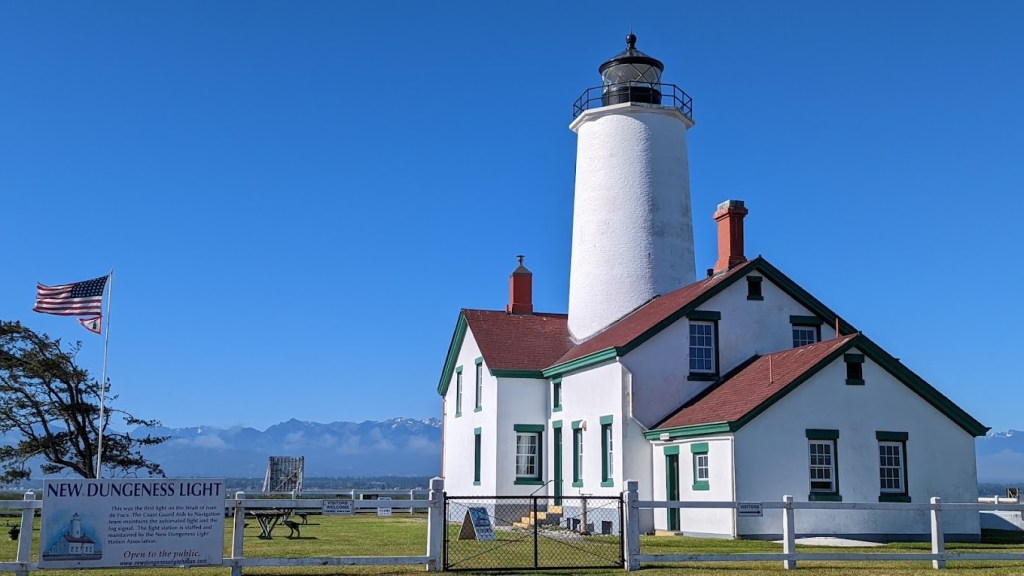
Sequim is known for the Dungeness Wildlife Refuge, located on the Dungeness Sand Spit, which is 5.5 miles in length and is the longest naturally occurring sand spit in the world. It’s a popular destination for birders, especially in spring and fall when lots of species make a stop on their annual migrations. There is also a lighthouse that began operation in 1857, making it the second oldest in Washington State. It’s 2.5 miles from the coast and, while it’s possible to walk to it, it’s necessary to watch the tides to avoid a swim back to the coast. Unlike so many coastlines and landforms that are shrinking, the Dungeness Sand Spit is actually growing in length by about a foot per year.

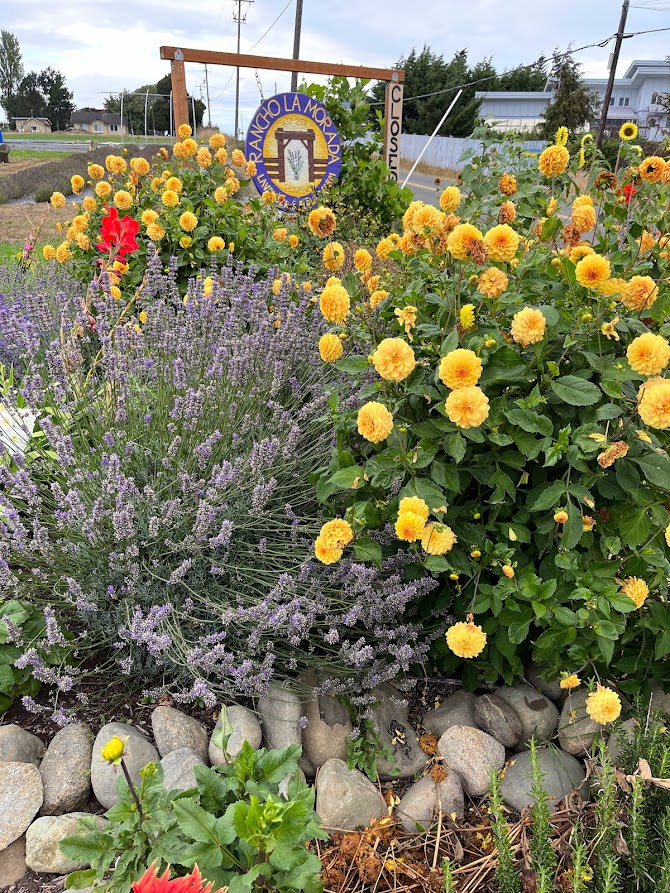
Despite being only 70 miles from the Hoh Rain Forest, Sequim has a Mediterranean climate. So much so that the tourism tagline is “Visit Sunny Sequim.” This makes it an ideal host to its abundance of lavender farms, which are tourist destinations and working farms that sell lavender for a variety of uses, including culinary and medicinal. Downtown Sequim’s shops sell plenty of local products, many of which are made from their star crop, including lavender ice cream, which we tasted, of course.
A side trip to Port Townsend
Port Townsend is a historic coastal town just under an hour’s drive from Sequim. How could we not drive over to take a look? It is like so many towns around the country that were prosperous up-and-comers in the early twentieth century but whose fortunes slipped, often during the depression. In the case of Port Townsend, it started out as a successful port, but after railroads became necessary for transporting goods, Port Townsend was passed over as a rail hub. Port Townsend’s commitment to preserving its historic downtown and large number of Victorian homes has made it popular with residents and visitors alike.


Two hikes and a nice lunch at Lake Crescent Lodge
Toward the end of the week, with Hurricane Ridge still closed, we took a park ranger’s recommendation to go on a couple of hikes just down the road near Port Angeles, including the Striped Creek Trail at Salt Creek County Park. We were, admittedly, skeptical of a hike in a little county park, but we gave it a try anyway. Striped Peak turned out to be a gorgeous hike through an old growth forest, with a towering ridge above and the shores of the Strait of Juan de Fuca below and, best yet, it is lightly trafficked, mostly with locals and campers in the county park’s campgrounds. About a mile into the hike, there is a lovely little sandy cove below the trail. It is possible to hike to the cove, but we knew that the tide was coming in so decided against it. A hike like this would be a destination in most places, but not on the Olympic Peninsula with its wealth of sumptuous landscapes.

Next we went to the Spruce Railroad Trail that hugs the shores of Lake Crescent. It is a rails-to-trails that is named for a logging railroad that operated for a short period of time in the Lake Crescent area many years ago. This is less of a hike and more of a stroll down a paved path and, unlike the Striped Creek trail, was crowded with walkers, bikers, strollers, dogs, and swimmers on the day we were there. Many of the swimmers were heading to Devil’s Churn, a cove with a bridge that is perfect for jumping into the sparkling blue water of Lake Crescent on a warm day.


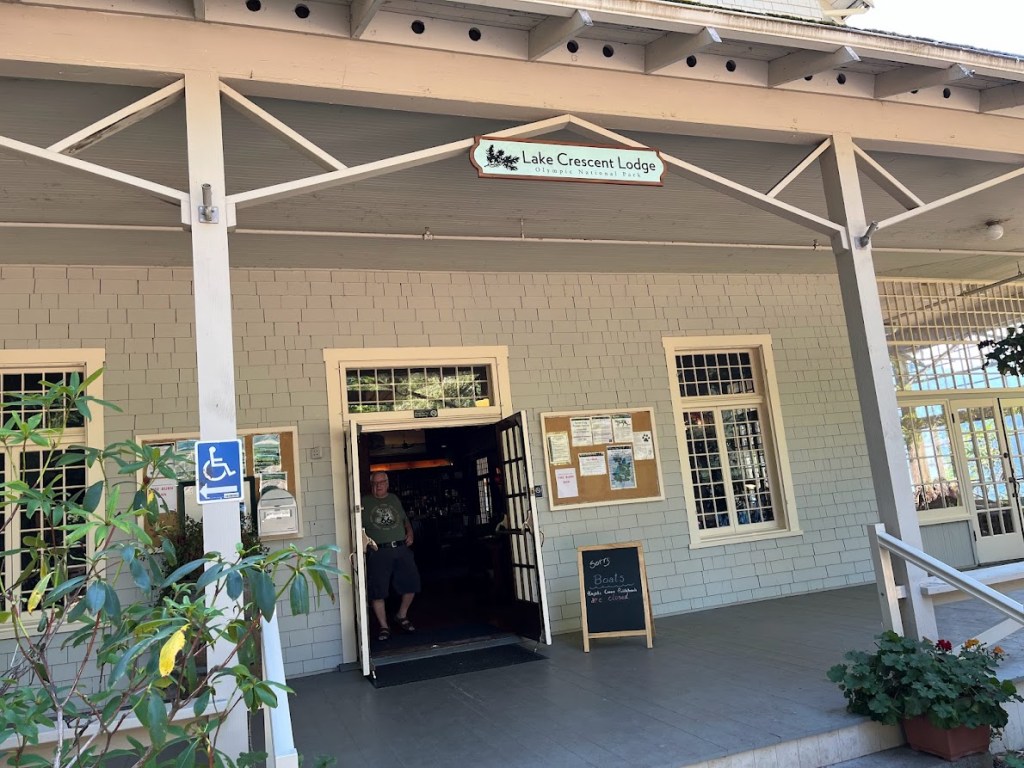
Since we lacked the foresight to bring swimsuits and join the fun, we moved on to the Lake Crescent Lodge. The lodge was built in 1914 as a small hotel of only seven rooms, but additions over the years to the lodge, as well as the addition of cabins, have resulted in a complex of 55 guest rooms. It narrowly missed demolition in the 1960s when the Mission 66 initiative of the National Park Service aimed to replace it with a more modern facility. The place has the vibe of a 1920s summer resort, which is exactly what it was in its early days. The great room is in the style of many national park lodges, but is smaller and has a more cozy feel than some. There is also a dining room with a killer view of the lake and mountains beyond, and an inviting porch. This was the Friday before Labor Day, so the place was buzzing when we arrived in the early afternoon. We couldn’t believe our luck when we got a primo table in the dining room by the window for lunch.


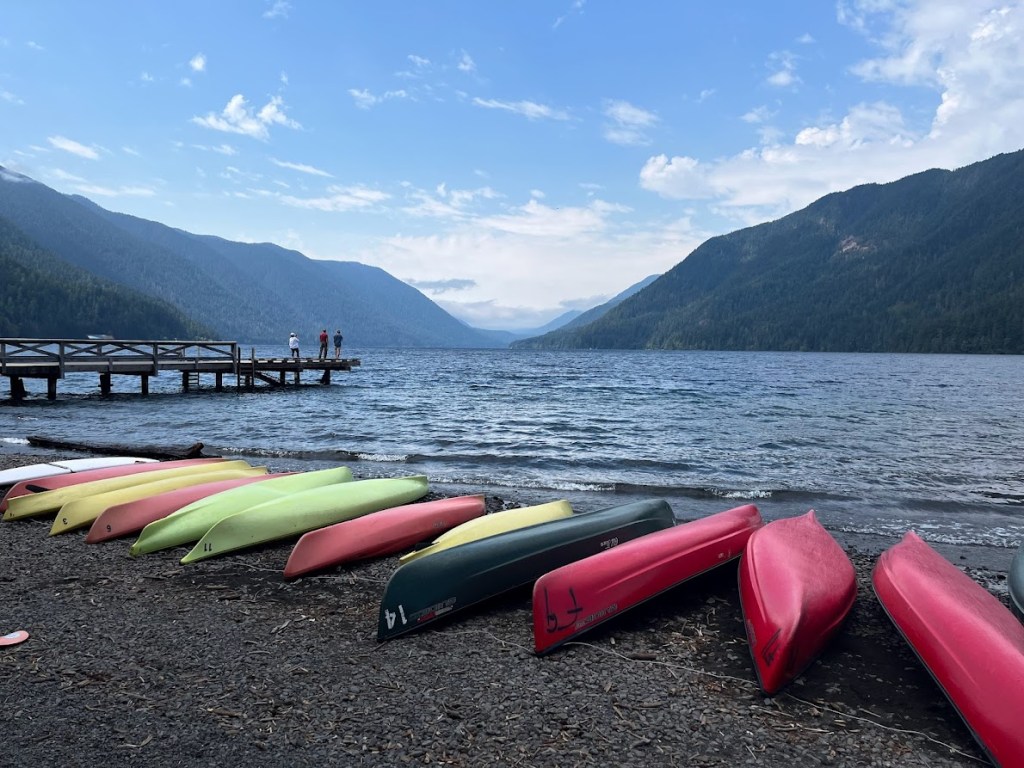
After lunch we retired to the lakeshore and found a double Adirondack chair to sit in and watch the scene before us of folks jumping off the pier, kayakers, swimmers, and people on stand-up boards enjoying the chilly sapphire water of the lake. The sun was warm, but the breeze was cool and the trees surrounding the lake were just beginning to sport the first of their red autumn leaves. There was a palpable sense that fall was tugging at summer and these carefree, sunny days were slipping away.


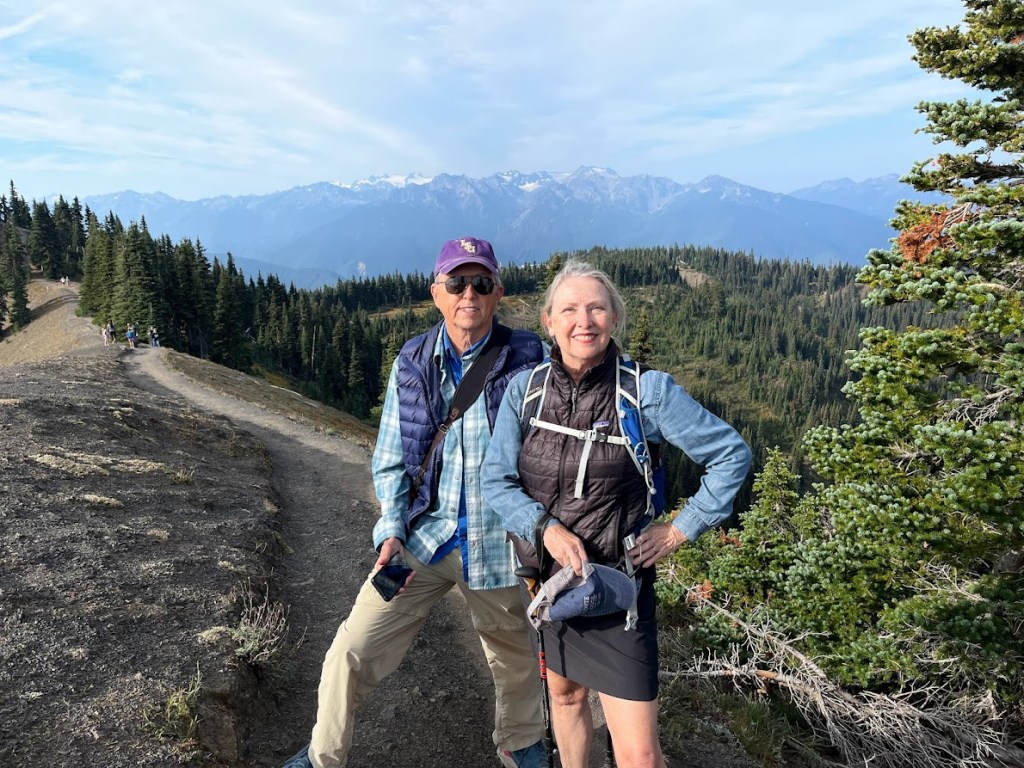
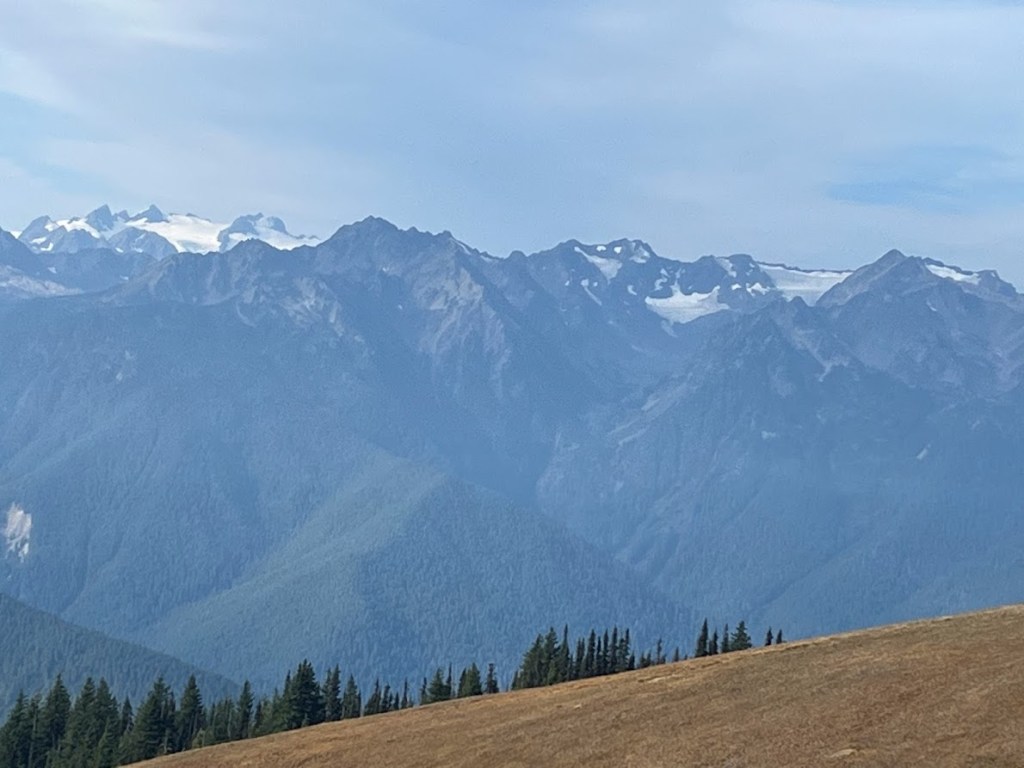
We were set to leave the next day to take the historic Coho ferry to Victoria, B.C., so we had figured that, with the road to Hurricane Ridge still closed and no word on reopening, we would enjoy a leisurely morning to pack up and arrive for our 11:45 ferry check-in. Then, in the wee hours, I checked the Olympic National Park website on my phone and saw that the road to Hurricane Ridge would reopen that morning! We made a quick decision, packed in a jiffy, and headed down to the road to beat the morning national park crowd to Hurricane Ridge. Our time there was brief, but we had a couple of hours to make the scenic drive and even to hike to Sunrise Point for a breathtaking 360 degree view below of glacier-topped mountain peaks, the Strait of Juan de Fuca, and Vancouver Island in the distance.

 You and Me, Odyssey
Oh, what a wonderful trip! You are quite the explorers! I stayed in a Victorian hotel in Port Townsend many years ago on a stormy night.
LikeLike
Yes, it was really fun. Fascinating part of the world
LikeLike