How many times had we planned and canceled trips to Big Bend National Park, I wondered. Four times, maybe? Or five? I can’t remember. And then, in late August, our friend Rick suggested that we plan a trip together to Big Bend for the October 2 new moon. The Big Bend area is the largest designated Dark Sky area in the world, hence the timing during the new moon. John and I already had a trip planned to fly to Phoenix on October 9 and head for Sedona, moving on to destinations in Southern California and eventually ending up in Yosemite. Could we add Big Bend to the beginning of the trip? It turns out that we could. In previous attempts, we had made (and cancelled) reservations at the Chisos Mountains Lodge, the only option in Big Bend National Park other than camping, but our last-minute planning meant that the Chisos Lodge was fully booked, so we decided to stay in Terlingua (population 78), just outside of the park.
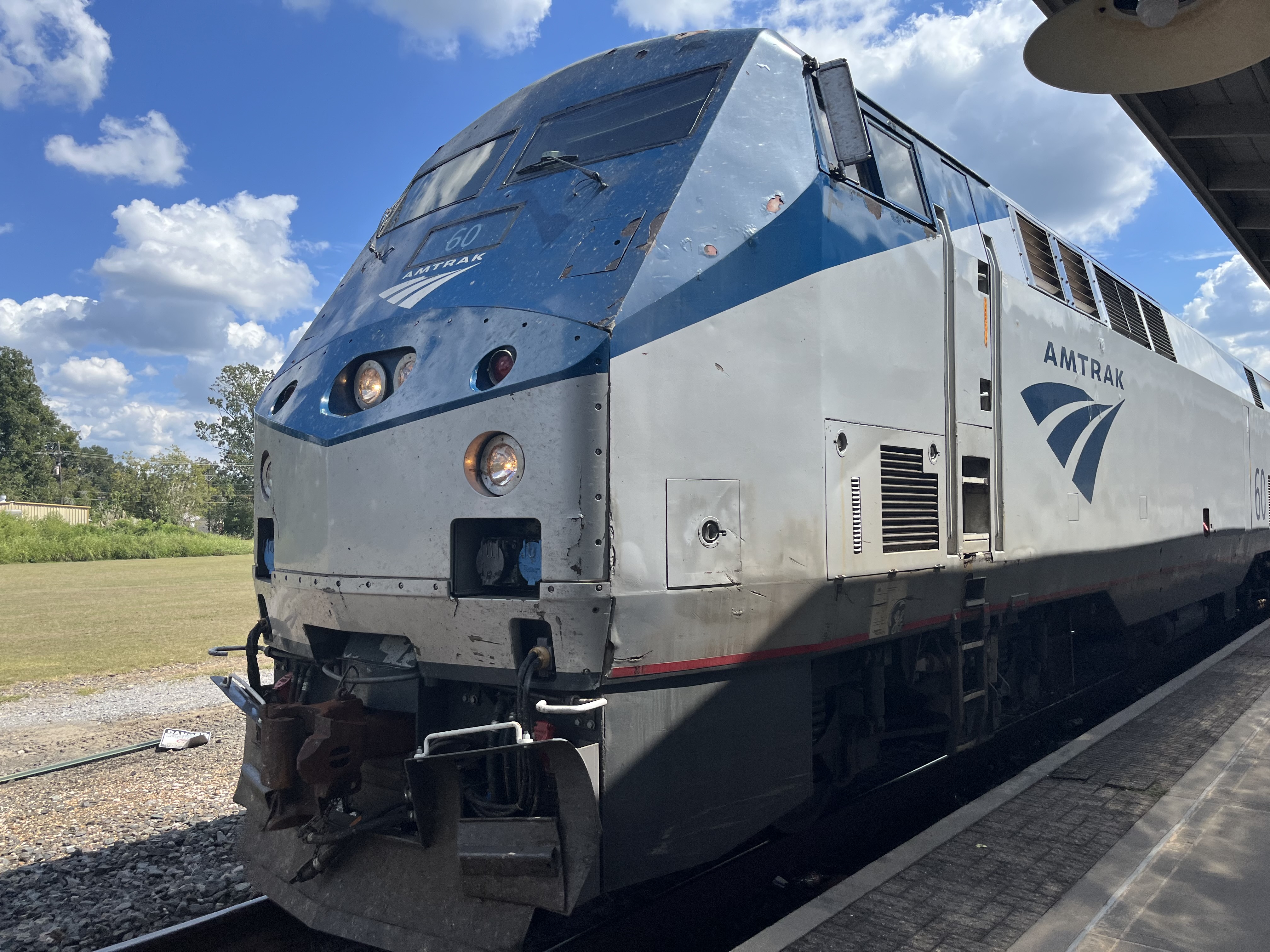
Big Bend is so remote that there is no easy way to get there. From where we live, in South Louisiana, the driving time is nearly 14 hours, and the nearest airport is in Midland, Texas, more than four hours away. And so it was that we found ourselves on the last day of September at the Amtrak train station in Lafayette, Louisiana to take the Sunset Limited overnight to El Paso, where we would pick up a rental car and drive east to Terlingua. In doing so, we would pass up a train stop in Alpine, TX, which is hours closer to Big Bend than El Paso, because there is no rental car option in Alpine.
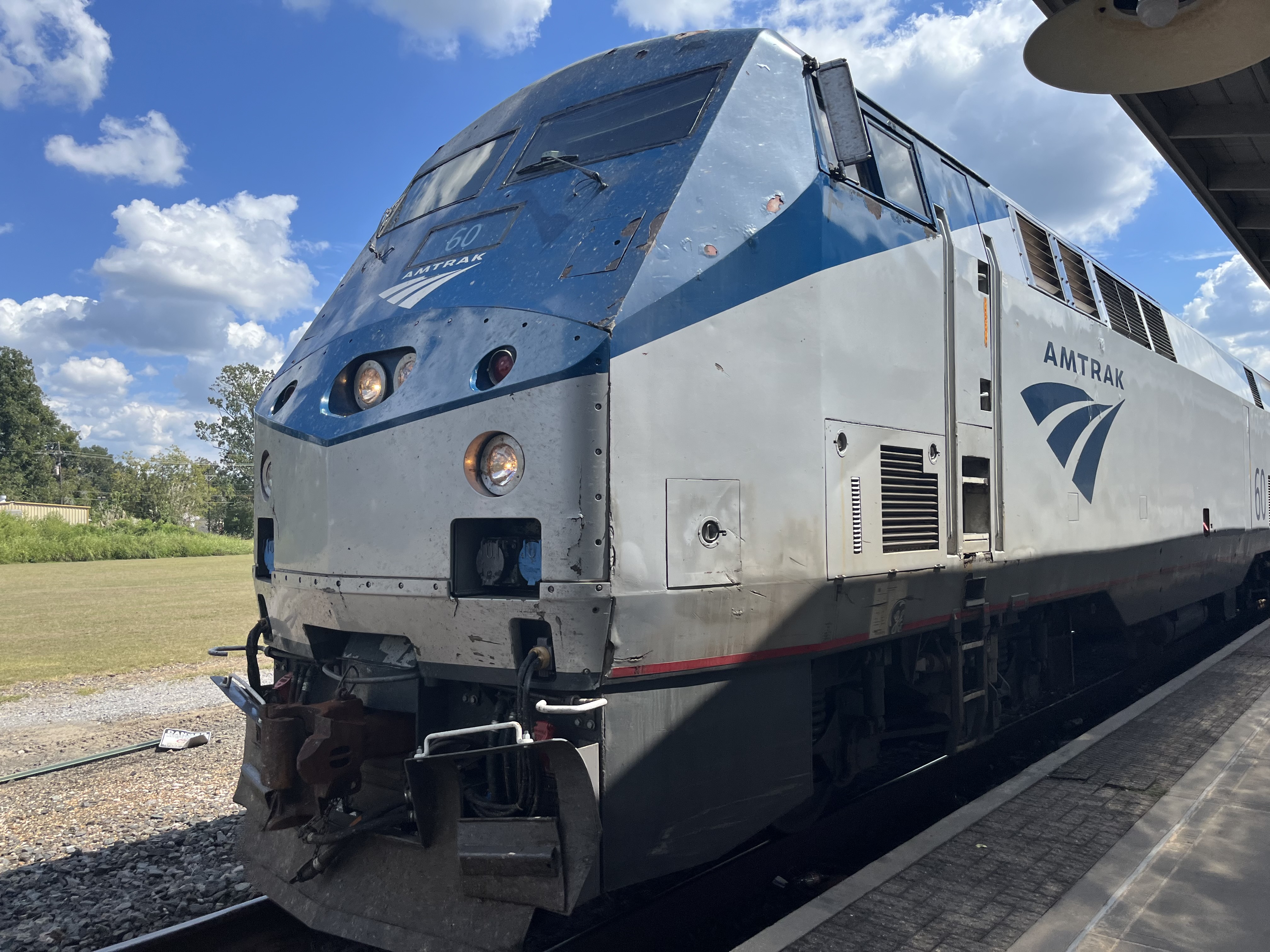
We haven’t travelled by train often, but John and I did take an overnight trip on the Amtrak Cardinal last fall, leaving from the Moynihan Train Hall at Penn Station in New York, going through Union Station in DC, then arriving at Union Station in Chicago the next morning. I took the top bunk of the roomette on that trip and enjoyed a cozy ride with ample room to move around with a window in the car extending high enough for me to see passing stations during the night and catch the morning sunrise from the comfort of my bed. My upper bunk on the Sunset Limited was a different experience altogether. The tight space required all the strength and flexibility gained from my yoga practice to get myself into and out of bed. I could forget about sitting up and, of course, there was no window to see outside in this little cocoon. Here is the reason for the difference: in the Eastern U.S., Amtrak utilizes a train model called the Viewliner, which offers more spacious sleeping spaces than the Superliner, which operates in the Western states. Nevertheless, we made it through the night on the Sunset Limited, awakening at dawn to see that the landscape had changed from the pine trees and marshes of South Louisiana and East Texas to dry desert. We were joined at breakfast by another passenger, a man probably in his early eighties, who was returning to his home in El Paso after circumnavigating the country on Amtrak over the previous three weeks, his second such trip.
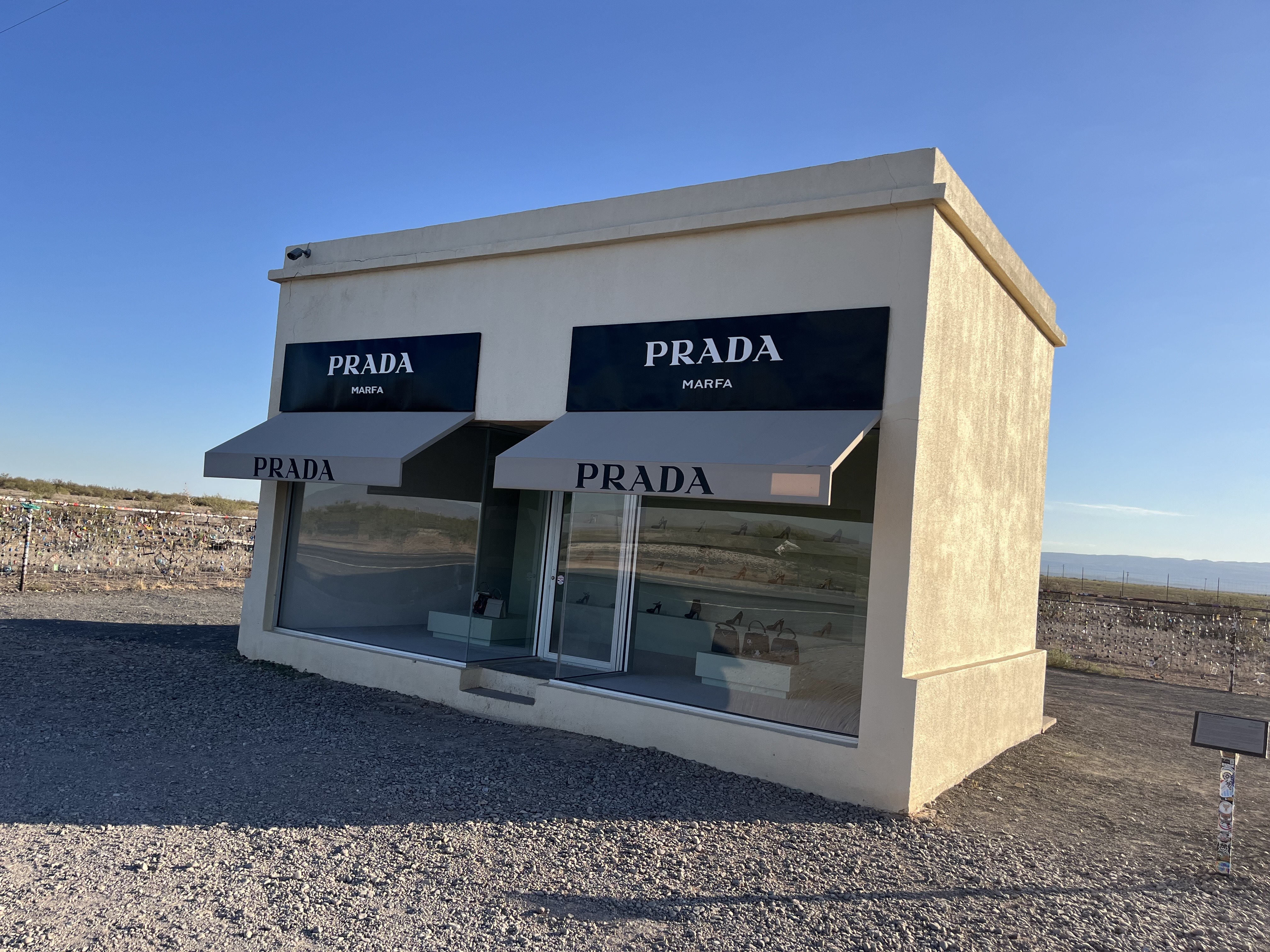
At last, we arrived in El Paso, late on Tuesday afternoon. Our fellow passenger from breakfast recommended that we try the tamales made by a local lady and sold trainside at the El Paso station. These tamales are so popular that there is always a line to buy them, he told us. Wanting to get down the road, we passed up the opportunity, which we later mildly regretted when our option for an evening meal was limited to the Dairy Queen in Alpine. Leaving Alpine at dusk we drove nearly 100 miles in a designated Dark Sky area between Alpine and Terlingua. As the car hurtled through the dark, guided by reflectors on road, it felt similar to the tunnel-like experience of my bunk in the Amtrak roomette. We arrived in Terlingua in near-total darkness, just barely able to see and recognize the house we had rented.
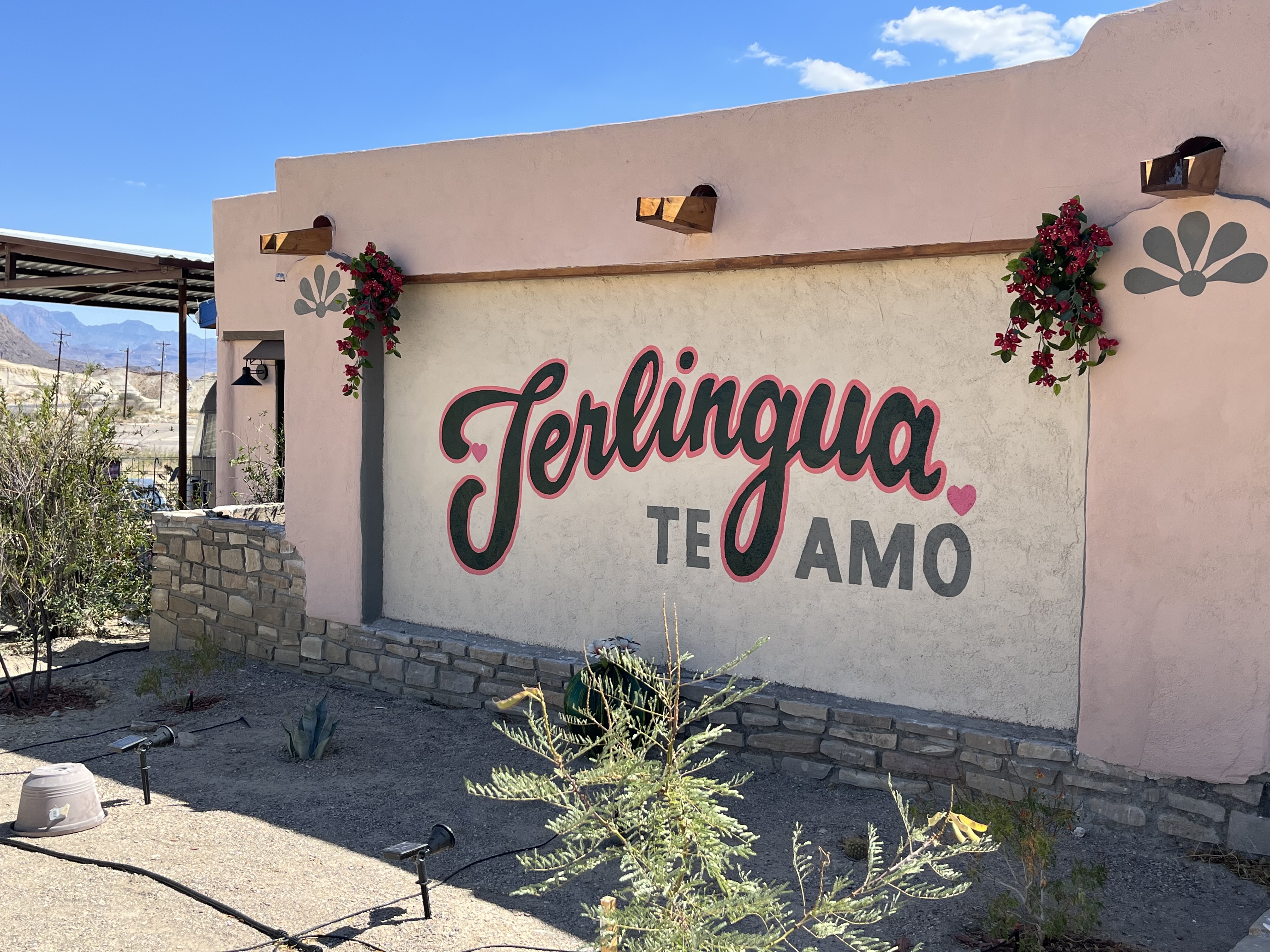
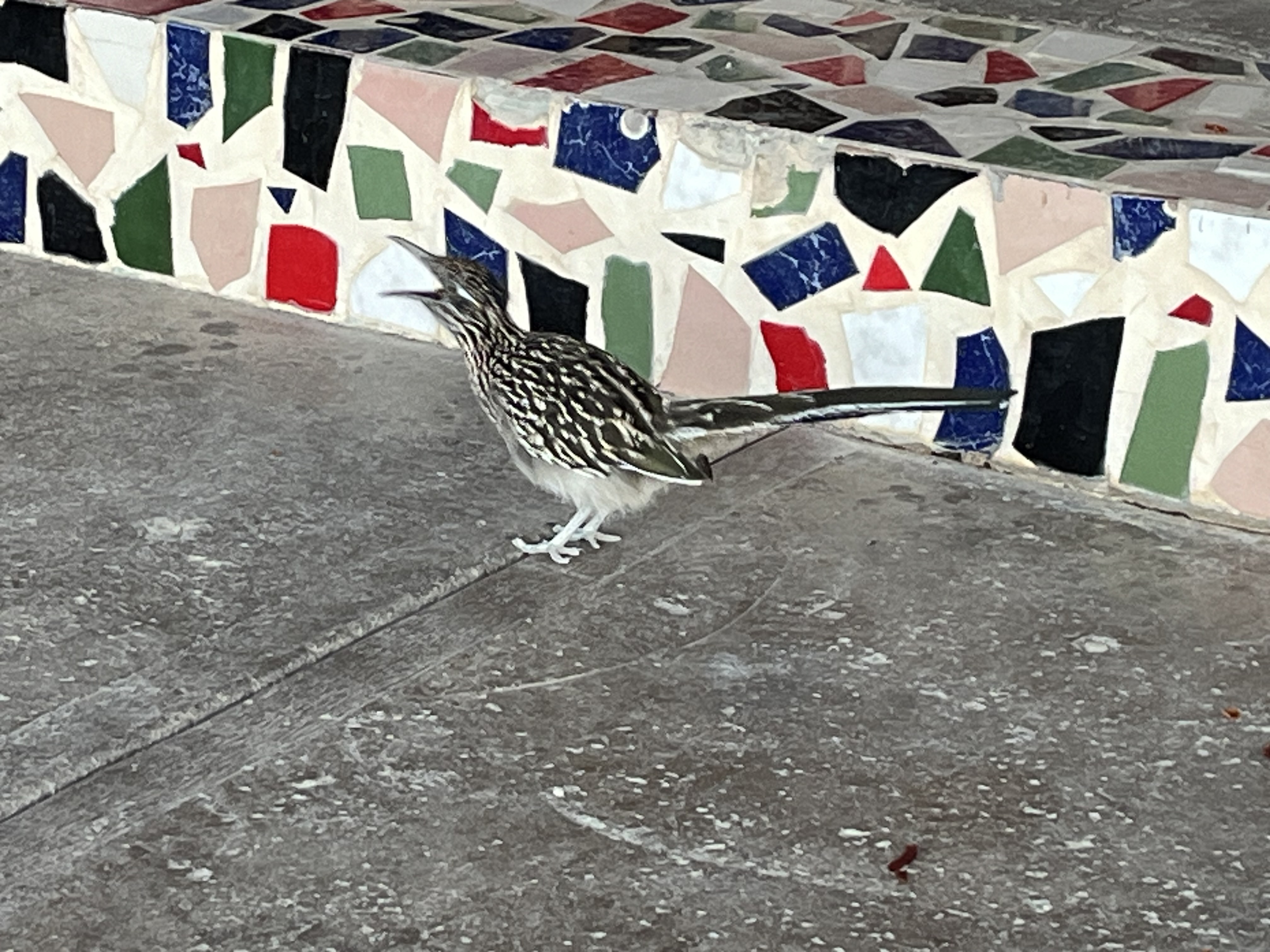
The next morning we awoke rested and happy to see our beautiful surroundings in the desert. We headed down to the Terlingua Ghost Town area, which is five minutes down the road. This is the old town of Terlingua, which is now a small entertainment district with restaurants and a modest hotel. It is the home of the world’s first chili cookoff, which was founded in 1967 and which still convenes annually in early November. We found a delightful little outdoor place for breakfast that served us delicious breakfast tacos and were surprised to see that the scavenger birds hanging around for our breakfast crumbs were not the usual sparrows or pigeons, but were roadrunners!
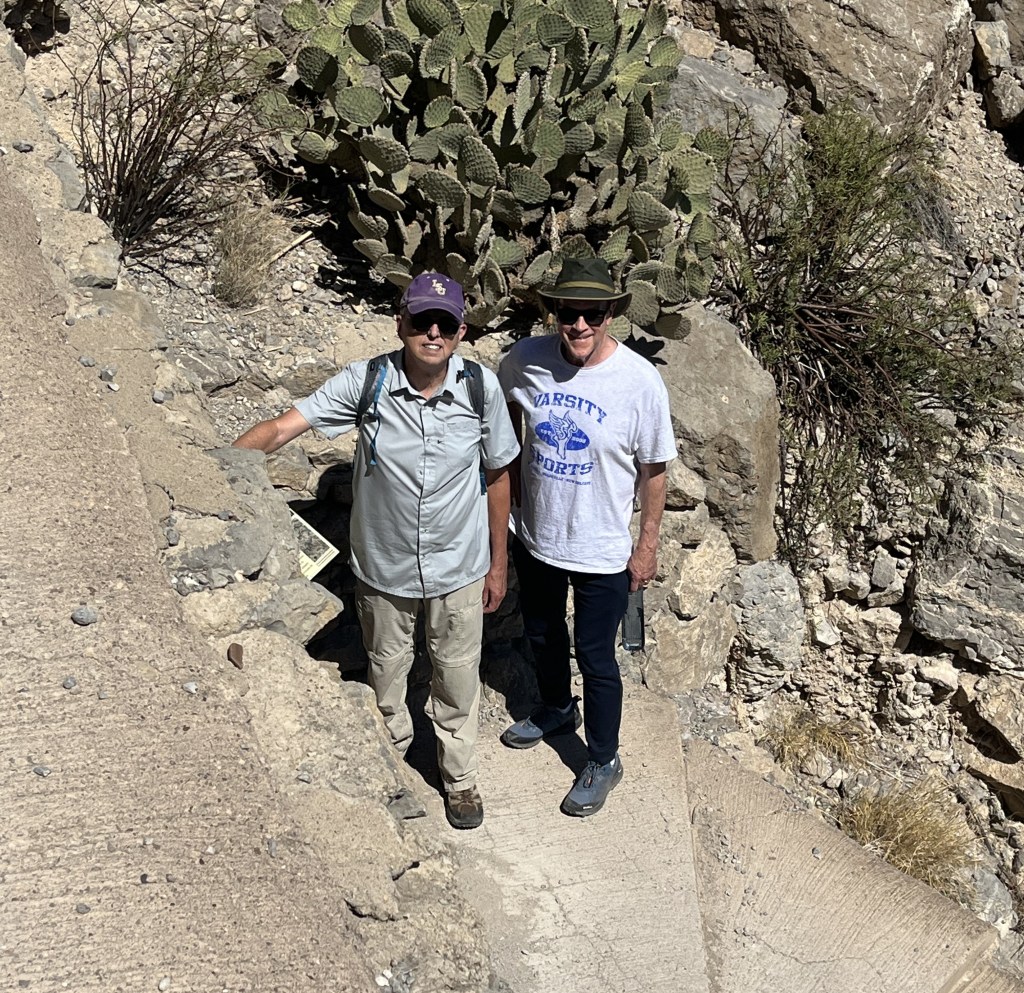
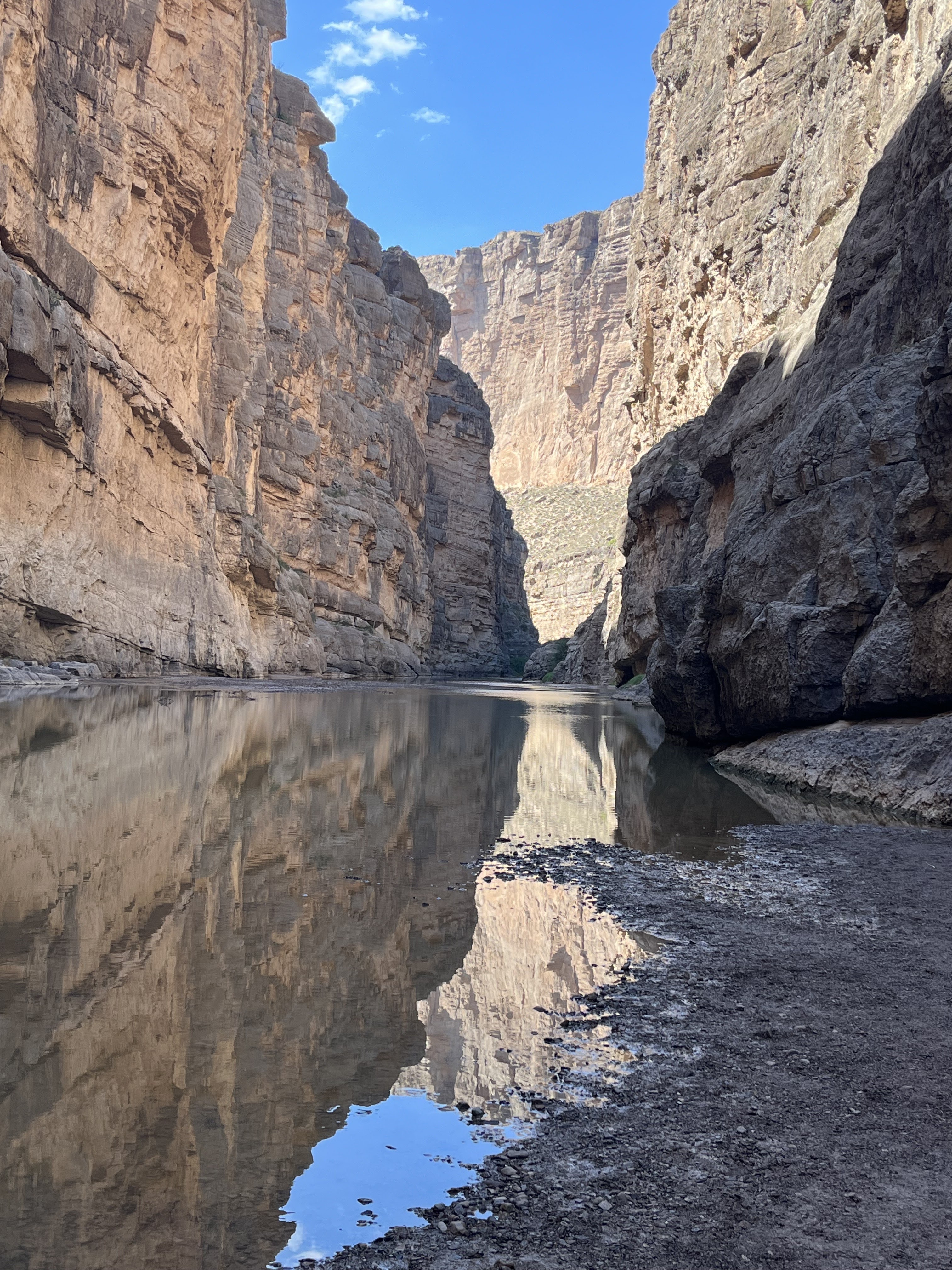
Fortified by a hearty breakfast, we took the short drive to Big Bend National Park. After a quick stop at the visitor center, we took the Ross Maxwell Scenic drive, which cuts right through this huge park, making our way to Santa Elena Canyon on the Rio Grande by around noon. If we had been more thoughtful about our planning, we would have started at the Santa Elena Canyon first thing to hike it in the cool of the morning and taken the scenic drive later in our air-conditioned car. Santa Elena Canyon is a beautiful hike, nonetheless, and after the initial climb in the sun, we enjoyed refreshing shade and a the iconic view of the canyon.
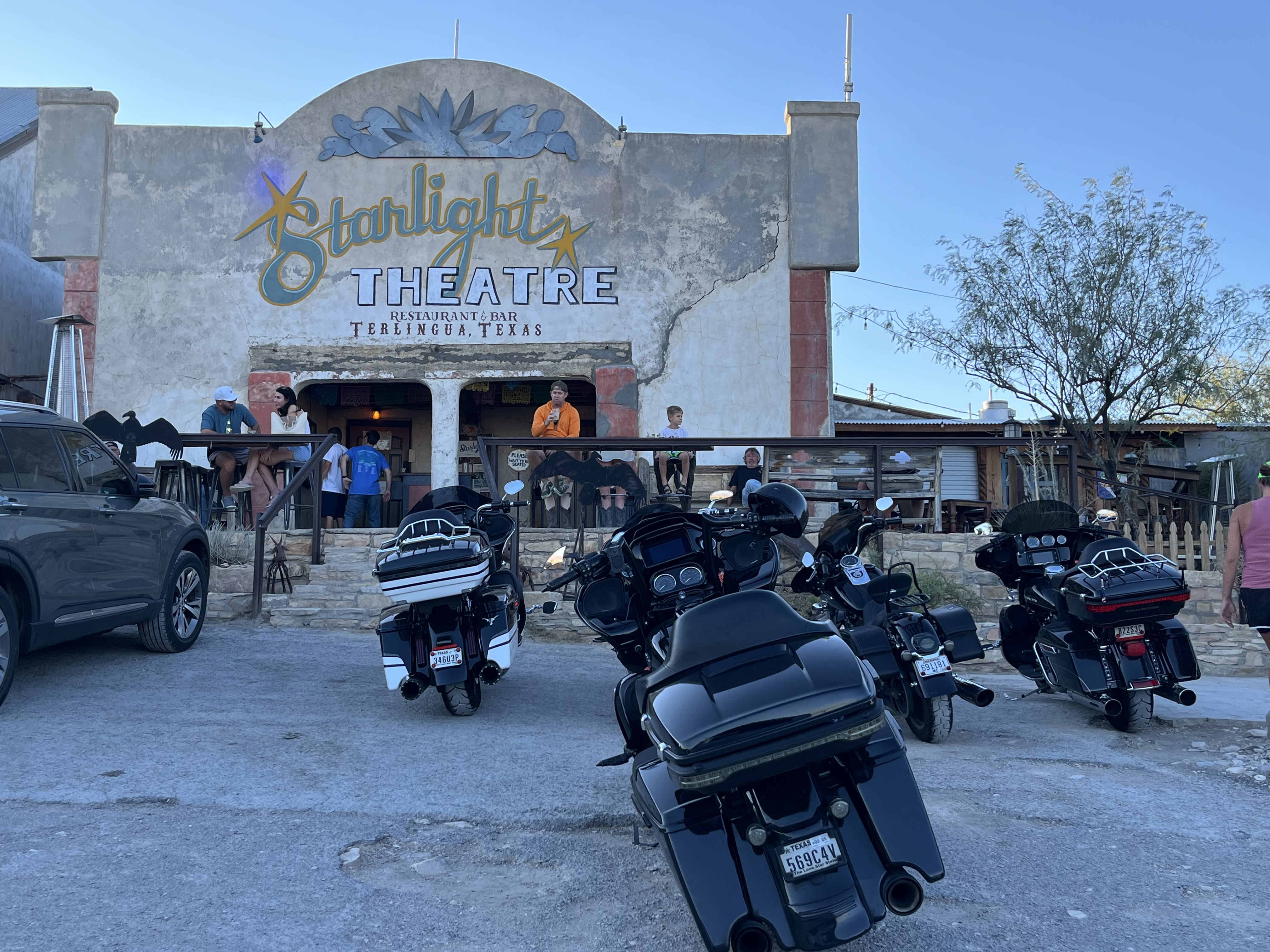
After getting back to the house and cleaning up, we went back down to Terlingua Ghost Town to eat at the Starlight Diner. Housed in the old Terlingua movie theatre it is the most popular restaurant in town. There is typically a line at the Starlight, however, we were about two weeks ahead of the busy season so were easily able to get a table.
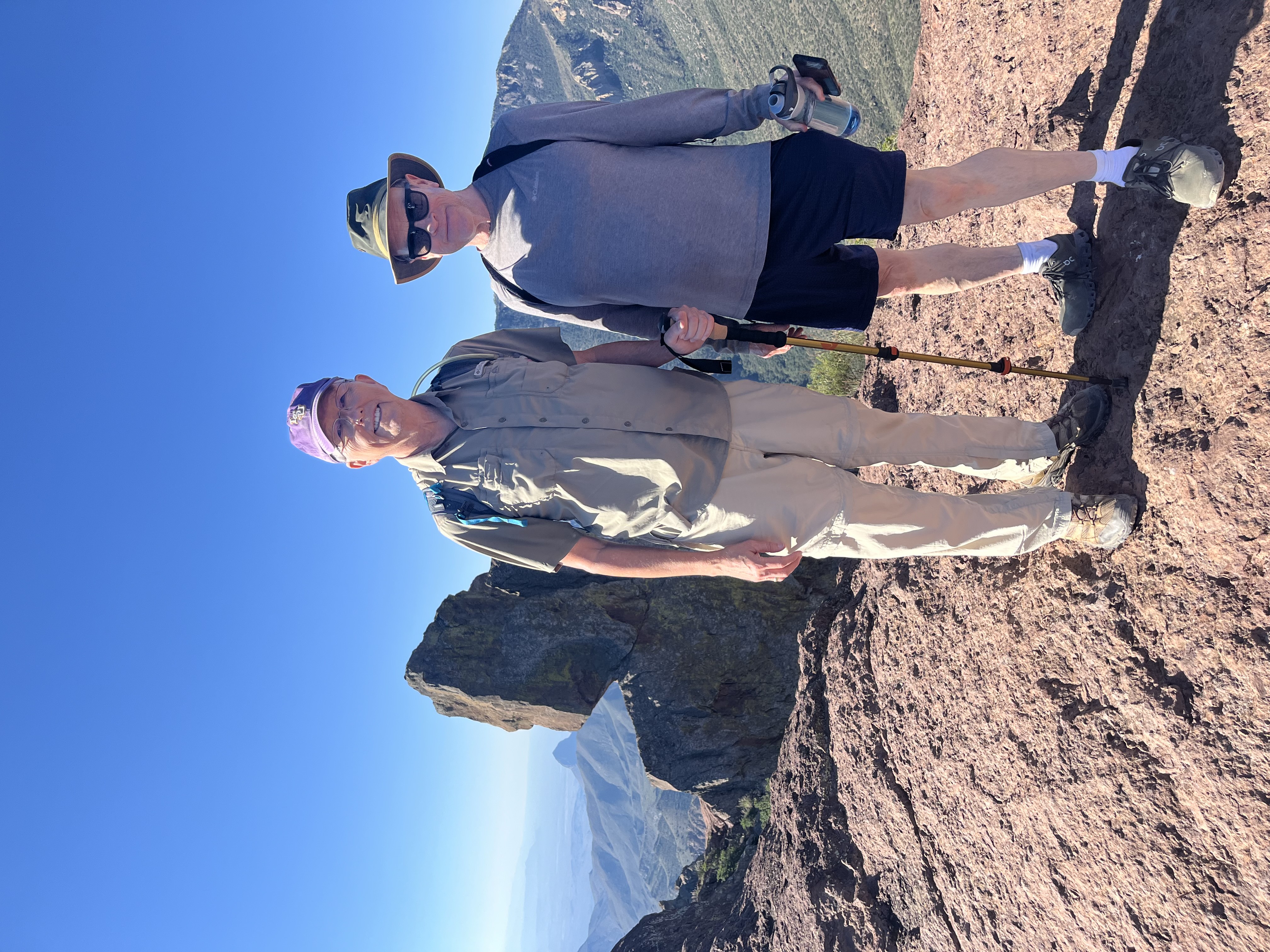
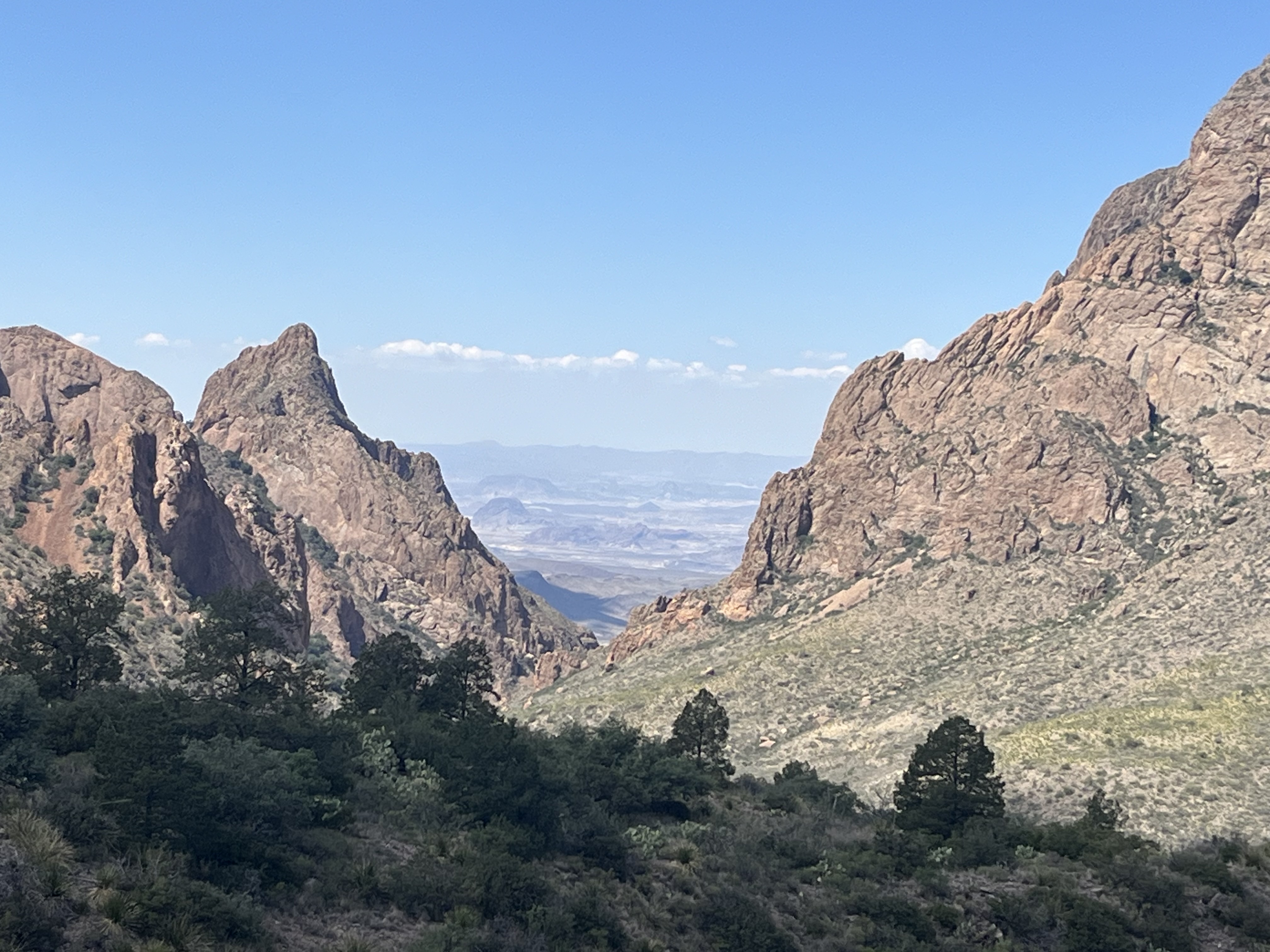
In our second day at Big Bend, we drove to the Chisos Mountains area of the park to hike the popular Lost Mine Trail. Although it’s only around five miles round-trip, there is an elevation gain of 1,100 feet. The summit offers sweeping views at the top, reachable by navigating rugged terrain. The name of the trail goes back to a legend of Spanish explorers who enslaved the local people to mine silver in the area. According to legend, the workers rebelled, killed the Spanish, and sealed the mine entrance. However, there is no evidence to support this legend and geologists don’t believe silver would form in the Chisos Mountains. In fact, the trail was built in the 1930s by the Civilian Conservation Corps (CCC). After our hike, we wandered about the Chisos Mountains Lodge, ate lunch at the restaurant there, and enjoyed the view from the short, paved Window View Trail. While we enjoyed our time in the Chisos Mountains area of the park, the Chisos Mountains Lodge and restaurant are nothing special and we were happy that we had landed in Terlingua, a town with quite a lot of character.
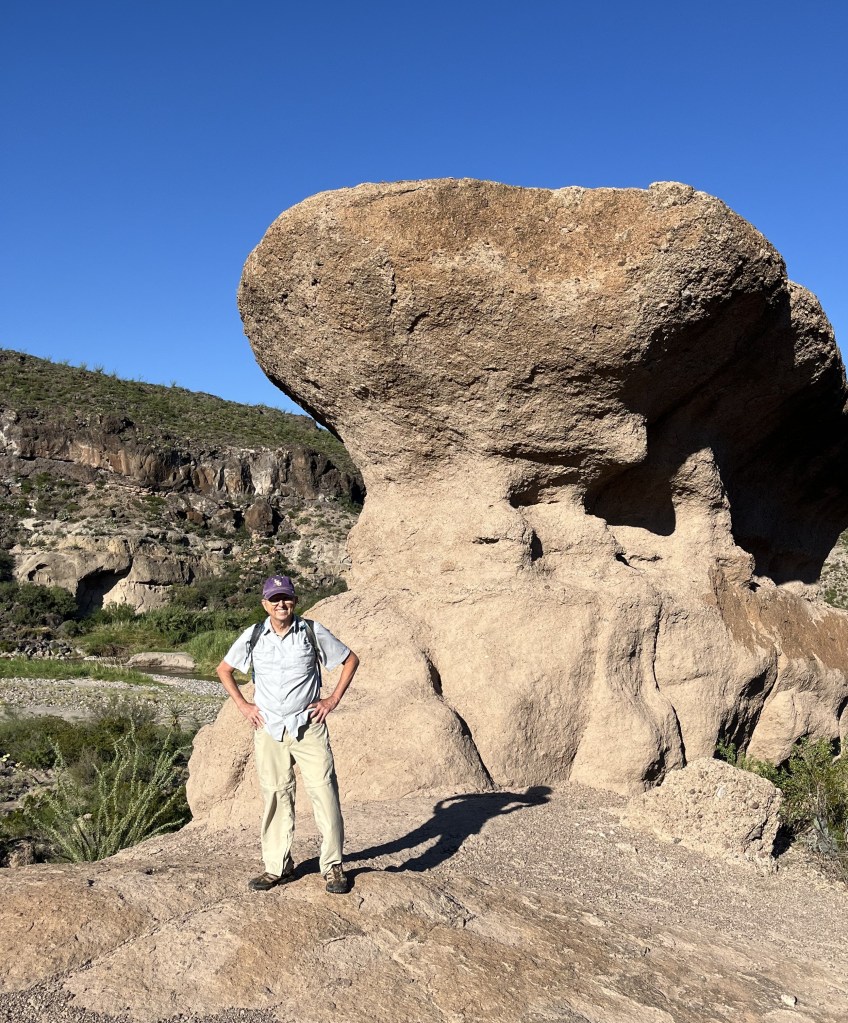
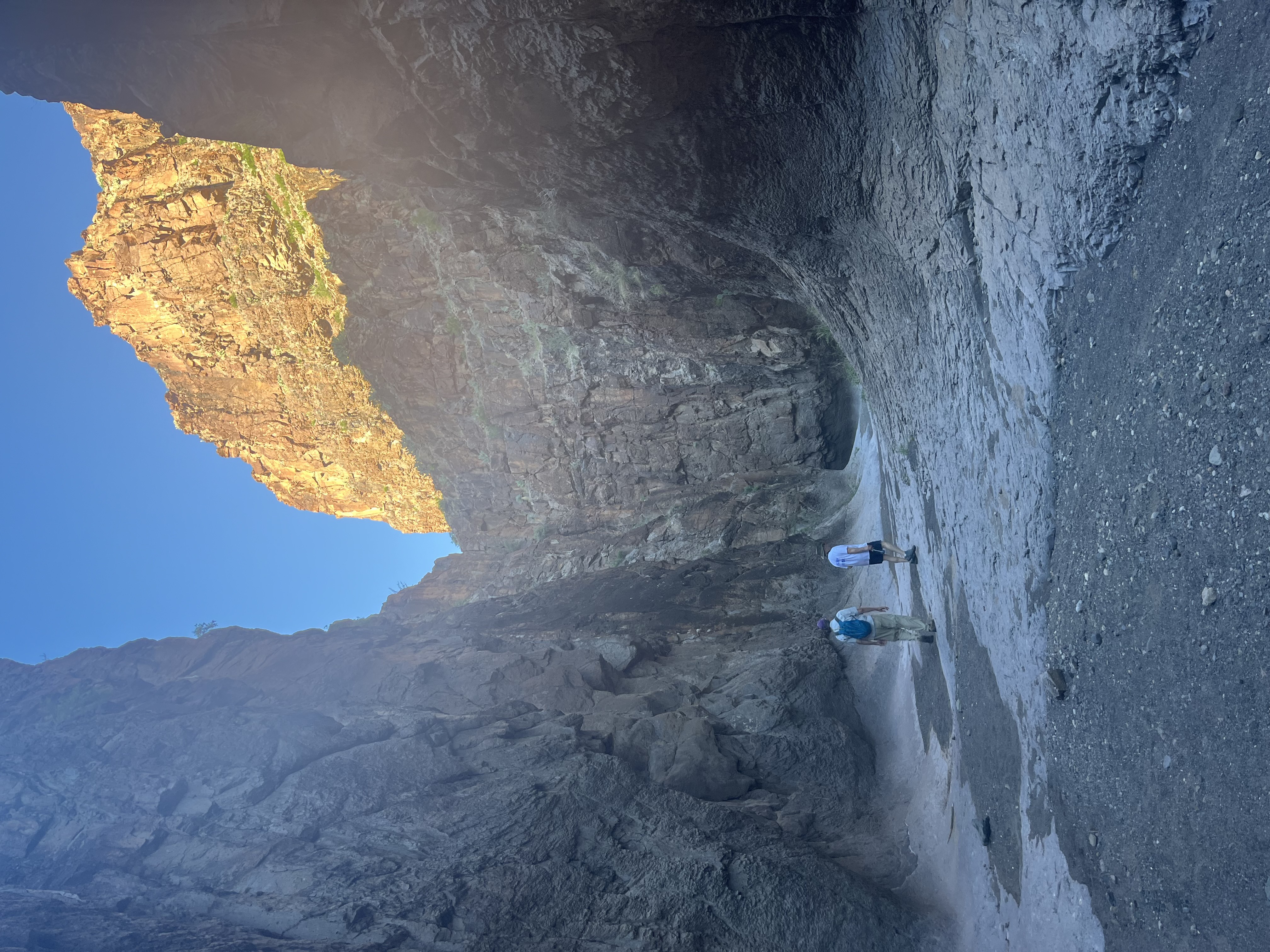
Our location in Terlingua put us midway between Big Bend National Park and Big Bend Ranch State Park, so, on our third day, we drove to the state park, the largest in Texas, at 300,000 acres. The state park rivals Big Bend National Park for hiking and scenic views and we spent the day driving what has been called one of the most scenic state park drives in the country, stopping along the way to take short hikes through canyons and to enjoy hoodoo formations. We eventually reached Presidio, Texas, only miles away from the U.S. border with Mexico, and spent time at the Fort Leaton Historic Site, which was never really a fort, but a fortified structure that was used as a trading post. The site was built in 1848 by Ben Leaton and his wife Juana Pedrasa to sell supplies to travelers making the long, treacherous journey from Austin and San Antonio to Chihuahua and Mexico City. In the unforgiving Chihuahuan desert, Fort Leaton offered a place of rest and protection for travelers, military forces, and traders in the region.
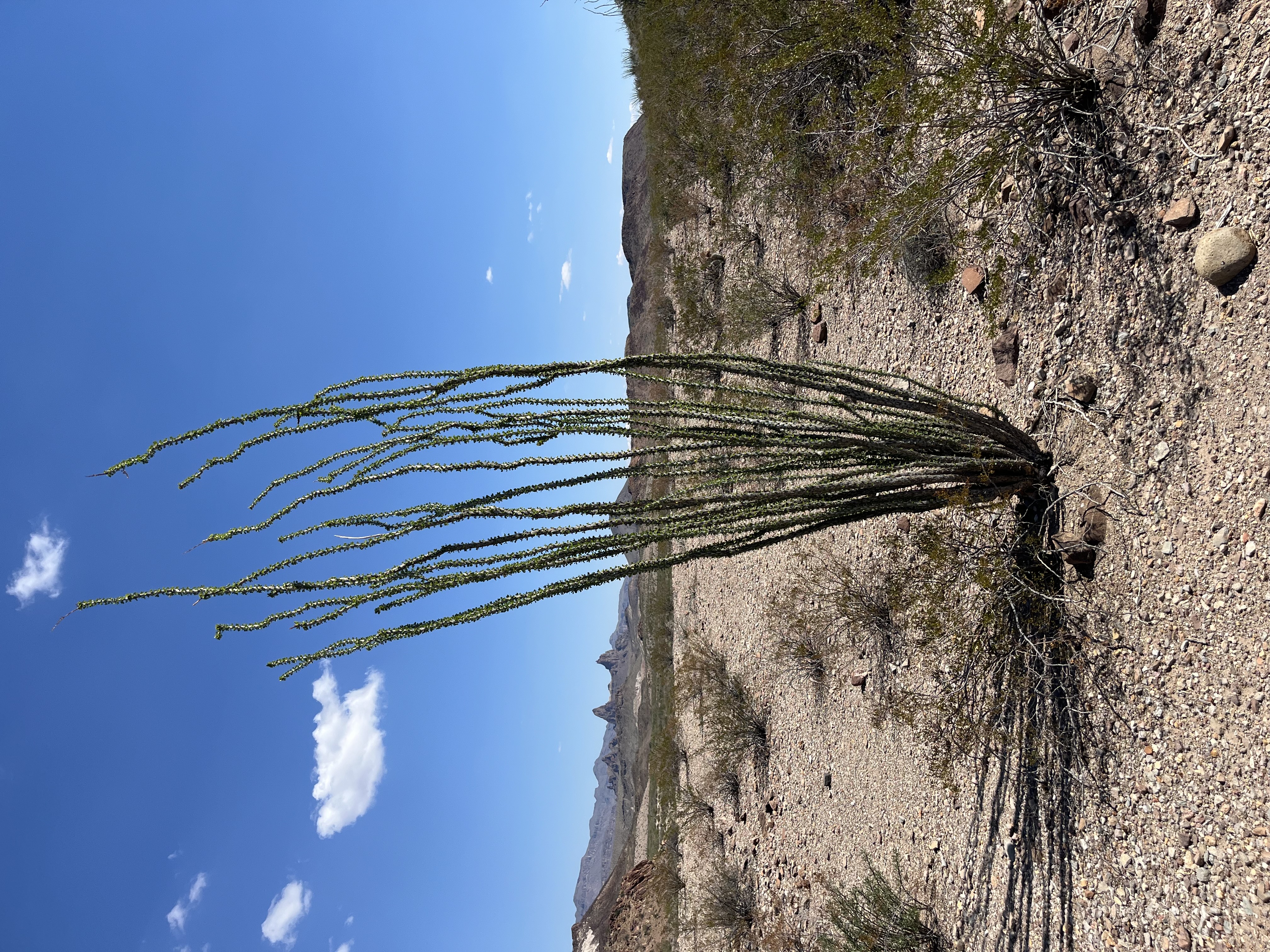
Was Big Bend worth the wait? Definitely, plus we had the delightful surprise getting to know Terlingua and Big Bend Ranch State Park.


Your trip sounds so exciting! However I don’t see any pictures??Sent from my iPhone
LikeLike
The pictures are there – I’m not sure why you don’t see them.
LikeLike
Got the pics now👍 They are Gre
LikeLike
Sallie,Wh
LikeLike