We arrived at our tiny house lodging in Floyd, Virginia on a Friday afternoon in early June. After weeks on the road, often in cramped hotel rooms, I was not sure that the tiny house was the best idea, but it was available and fell within our budget, so there we were. We took a look around at the tiny house, along with the host’s house up the hill, and the land – rolling rural Virginia countryside. Our hosts, Hari, Karl, and their two teenage kids, were away in Roanoke for their daughter’s high school graduation. The tiny house looked smaller in person than it had in the photos. We have downsized in the past couple of years from a 2400 square foot house to a 700 square foot condo, but that did not prepare us for the 168 square feet of the tiny house. Oh, well – we have had endless conversations over the past three years about getting a camper – we figured that the tiny house would provide an opportunity to see whether we could really manage in such a small space.


Getting to know Floyd
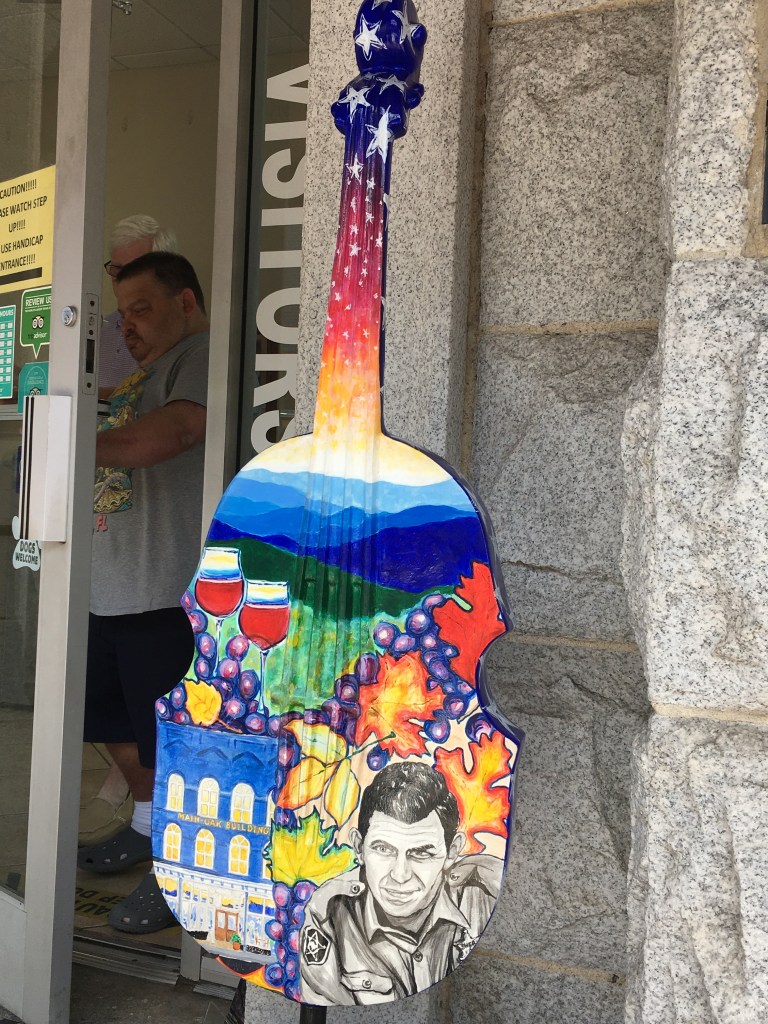
We put our things in the house and headed down to Floyd. In the small amount of research that I had done, I knew a little about Floyd, for example, the Floyd Country Store is a bluegrass and country music destination that offers popular free concerts on Friday night. Floyd is part of the Crooked Road Music Trail, a designated path for local music. Once in town, we found that Floyd is a fun little place with an easy bustle – it has several cafés and shops, an impressive Saturday morning Farmer’s Market, and friendly locals who always seem ready to welcome a visitor to town. Our time in Floyd and the surrounding area was full of good music and good times and I would recommend it to anyone. While there, we took a couple of very enjoyable hikes and enjoyed some interesting local sights. We heard lots of local bluegrass music, and even visited Mount Airy, Andy Griffith’s birthplace and the model for Mayberry, the fictional town in the Andy Griffith Show. But the star of the show for me was always the tiny house.

Life in the tiny house
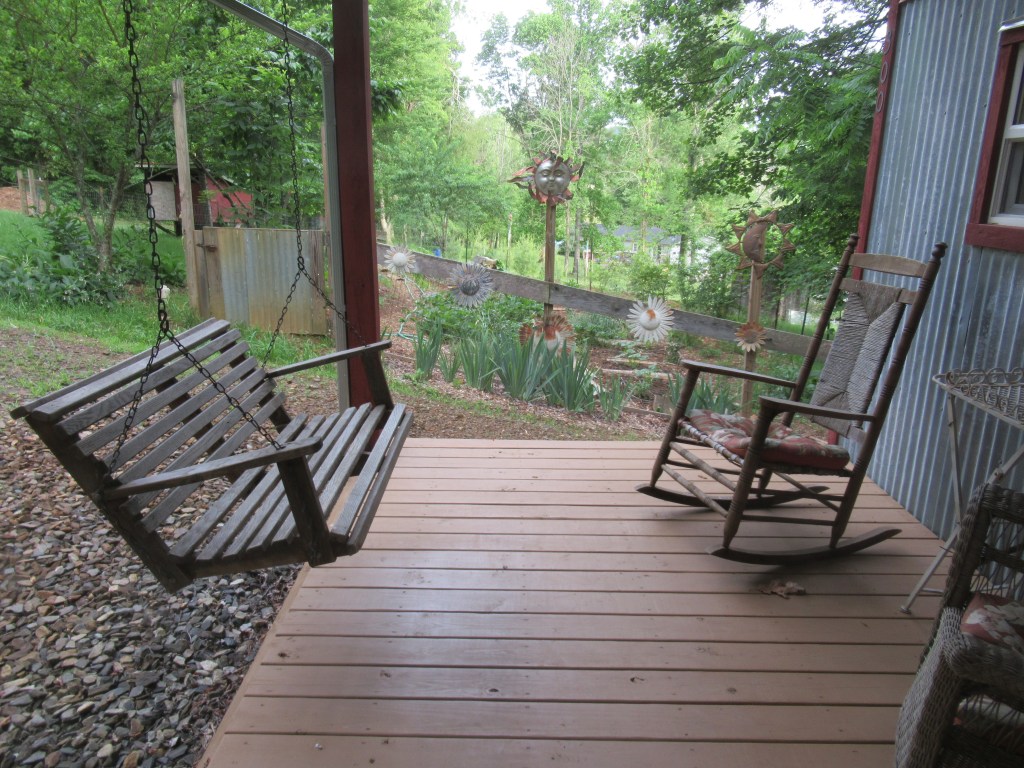
We had booked the tiny house for five nights and, despite the surprise of its tiny-ness, I knew almost from the start that this would not be enough time. We started our days there awakened by morning birdsong. We would eventually move out to the porch and, once there, it was difficult to make ourselves move on to explore the area. It was so lovely just to sit and watch the day open up. At the end of a day of sightseeing or hiking, I looked forward to returning to the tiny house, enjoying views of Karl and Hari’s garden right off of the porch and lovely sunsets.
On our first morning, we tore ourselves away from the tranquility of the porch and ventured down to the Floyd Farmers’ market, where we enjoyed conversations with the vendors and bought fresh bread and shitake mushrooms, local farm-raised chicken, and sugar snaps, which we cooked for dinner that night. Later in the week, Hari brought us a dozen eggs from her chickens and invited us to help ourselves to lettuce, strawberries, and other goodies from their large garden. We used the eggs and the bounty from the garden to make a frittata one night and salads for several days. John and I have always enjoyed making ourselves simple meals from fresh ingredients and most of the places we had stayed on this trip made this difficult to impossible.


Our hosts, Hari and Karl
In the course of our stay, we had a few conversations with our hosts and learned that they had moved to Virginia and bought their three acres after a restaurant they owned in Florida was lost in the aftermath of Hurricane Fay in 2008. They had to declare bankruptcy, losing both their business and their home. The couple and their two children, then in elementary school, lived in the tiny house for more than four years and, in the process, they built a house for themselves, largely from recycled materials. When a neighbor’s barn literally fell to the ground, Karl was able to put the resulting salvage materials to good use. Hari put in physical labor, pulling nails from the boards. Living frugally, they were able to emerge from debt and they now own their land and house free and clear. Hari created and operated a little cottage industry for a few years, training and counseling more than 250 people to live a debt free life. These were heady years when she and Karl were invited to fly to New York to be on Anderson Cooper’s show and their house was featured in Ladies’ Home Journal magazine. Things are quieter now. Karl takes jobs doing renovation work on other people’s houses, Hari just took a new job for a medical equipment company, and both of their children will be grown and gone soon. The tiny house still stands, a monument to the family’s grit and determination. The rental income from it is a key piece of their debt-free financial security and it is a delightful oasis for guests.

The lessons of the tiny house
On our last morning in the tiny house, as I replaced a few things that I had moved to make room for our own things. I noticed a book, Turning Tiny: The Small Living Paradigm That’s Reshaping the Way We Think, Live and Dream. The book had a slightly worn blue post-it note marking a page. I opened it, and there was an essay written by Hari about the four years the family lived together in the 168 square feet space of the tiny house. It was beautifully written and bracingly honest. She did not downplay the difficulty of the family being in such close proximity, but reflected on the personal growth that came with the experience. As she put it: “My goal in this essay is to show that even if you don’t live tiny forever, the gifts of extreme downsizing are numerous and long lasting.” But (I add) they are undeniably challenging. Living in such a small space with husband and kids required more of her, as it would any one of us. Being a casual housekeeper was not an option and seeing that the children kept their spaces organized was difficult, but necessary, and sometimes led to her being harsher with the children than she would have liked. There was simply no room for clutter, meaning that decisions around what to keep and what to toss or donate had to be made constantly, forcing daily choices between beauty, sentimental value, and functionality. These were choices of peace and harmony versus insanity. We are talking Marie Kondo ninja territory.
The family utilized a small folding table and chairs that had to be hung on the wall after each use and showers were alternated so that each person took a shower every other day. The only way to find much-needed space away from others was to leave the house, leading Hari to take frequent walks around the acreage of their property, offering solitude and connection with nature. Living in the tiny house was a challenge, but one that clarified values and taught powerful lessons in problem solving. Hari described these as the “lessons of the tiny house,” and she explained in her essay that these lessons informed choices that they made in building the larger house they live in now. Their decisions were guided by questions of what is truly needed and what is not. How should they balance togetherness and privacy? What role should function play in the house and how could they create spaces that are both functional and beautiful? The resulting house features tiny closets and large windows. Every nook and cranny is functional. There is no linen closet because each bed has only one set of sheets. Fossil fuel is limited to a wood stove that warms the house in winter. Life itself is stripped down to the essentials and the mindset is to be happy with what one has. These are the lessons of living tiny in action.

For John and me, the tiny house was a refuge and retreat, a sweet little nest where we were able to connect and enjoy each other’s company. We knew that we would leave it refreshed and relaxed, and we did. What we did not know is the ways in which it would make us think differently about our living space choices. And, who knows, maybe we really can make a go of it in a camper. At least on a part-time basis.

 You and Me, Odyssey